The €10,000 Megawatt: Why Europe Can Still Win the AI Infrastructure Race By Ivo Prokopiev, Founder and CEO, Renalfa
The €10,000 Megawatt:Why Europe Can Still Win the AI Infrastructure Race
By Ivo Prokopiev,Founder and CEO, Renalfa
A megawatt-hour of electricity sells for around €100 on Europe's wholesale power markets. Route that same megawatt through a rack of GPUs instead of a factory floor, and it can generate roughly €10,000 of economic value. That simple comparison captures one of the biggest opportunities of this decade, and one Europe is in danger of watching others capture.
Europe will not out-build Silicon Valley on chips, and it will not match American hyperscalers megawatt-for-megawatt in data-centre investment. Having spent much of my career in European energy and infrastructure, I know how difficult that race would be.But there is another race worth having: who prices compute, who hedges it, who finances it, and ultimately where the world trades it. That race is still open,and Europe has an unusual advantage: for the past 25 years, it has quietly built much of the market infrastructure needed to make this possible.
A race we lost, and one we haven't
Let's be realistic about the numbers. The US technology giants are investing hundreds of billions of dollars in AI infrastructure, and no combination of European governments and private capital is going to match that scale in the near term. The gap is not only in hardware, either. Europe is also late in AI software: we have fewer companies building and training frontier models at scale, and far less hyperscaler-scale compute deployed behind them. That makes it even more important to identify the part of the AI value chain where Europe can build a structural advantage, rather than simply try to close a gap it is unlikely to close.
Europe should not try to out-build the Americans. Instead, it should exploit an advantage it already possesses. Today, Europe has sophisticated, interconnected markets for electricity, gas and emissions. EEX and EPEX SPOT provide reference prices across multiple countries, while European Commodity Clearing provides the clearing infrastructure used by banks, utilities and trading firms. This is not a theoretical advantage: it exists today, and the logical next step is to extend that market infrastructure to compute.
Europe should create a standardized EU Compute Index, a transparent reference price for compute, and then develop a more ambitious product: Power+Compute, combining electricity and compute capacity into a single tradable and hedgeable instrument. That would be a fundamentally new market.
Why bundle power and compute?
Data-centre operators and AI companies face two increasingly important risks: the cost and availability of electricity, and the cost and availability of compute capacity.Today these are managed largely separately. An AI company can contract for power and separately negotiate access to GPUs or cloud capacity, but neither contract necessarily gives it an effective hedge against the other.
Power+Compute would change that. Imagine a contract that gives an AI operator access to a defined quantity of compute, backed by a defined quantity of electricity, with both risks priced and settled through a common financial-market infrastructure. Two volatile inputs suddenly become one financial exposure, and that matters not only to traders, but to banks.
A standardized,transparent and hedgeable compute market could make future cash flows easier to understand, finance and securitize. It could turn compute capacity from something negotiated privately between a cloud provider and its customer into an investable and tradable asset class. Europe is unusually well positioned to build such a market, because it already has decades of experience integrating electricity markets across borders, balancing physical supply and demand, and managing commodity risk. That is the foundation on which the next market can be built.
Wall Street did not wait
The competitive landscape has moved quickly. CME Group has announced plans for GPU compute futures, with contracts scheduled for launch in October 2026, and has described compute as “the currency of the AI age.” ICE has also entered the field,including initiatives around compute pricing and energy-normalized compute indices designed to sit alongside its established power and natural-gas futures markets.
This changes the urgency of the European proposition. The original question was whether someone would financialize compute; the answer is now clearly yes. The question that remains is who will define the market standard. CME and ICE have enormous advantages: liquidity, global distribution, sophisticated clearing infrastructure and deep relationships with institutional investors. So Europe should not attempt to beat them by copying their products. Its opportunity is to build something different.
The European proposition should be a physically anchored compute market, linking compute capacity to electricity, renewable generation, grid constraints and ultimately physical delivery within the European market. The distinction matters: an energy-normalized compute index can tell you what compute costs relative to electricity, but a European Power+Compute market could create a financial instrument whose underlying economics are tied directly to both. That is a much more ambitious proposition, and potentially a much more valuable one.
The€500 billion opportunity
The capital required to build competitive European AI infrastructure through 2030 will be enormous.Estimates range from hundreds of billions of euros for data centres alone to substantially more once the broader compute ecosystem is included, and the EU has already recognized the scale of the challenge through its AI Continent strategy. But Europe does not need to subsidize every data centre. It needs to create the conditions under which private capital can finance them, and that means building the market infrastructure first.
The European Union could attach a simple principle to publicly supported AI infrastructure: if public money materially de-risks compute capacity, a portion of that capacity should be available through an open European market. A new exchange would initially face the classic chicken-and-egg problem: without liquidity, traders will not come, and without traders, there is no liquidity. Public procurement can help solve that problem. Public-sector, research and defence computing supported by European funding could be required, where commercially and operationally appropriate, to procure a portion of its capacity through the new market, and publicly backed compute facilities could similarly be required to list a share of theirs.
The objective would not be to control prices; it would be to create price discovery. Once a credible reference price exists, private contracts can be priced against it,banks can lend against it, developers can hedge against it, and investors can value it. That is how a market begins to compound.
Public money should backstop the market, not own it
Europe should resist the temptation to build state-owned data centres simply because the private sector is moving faster. Public capital is better used to address the risks that private investors cannot efficiently bear during the market's early years:liquidity support, settlement guarantees, first-loss mechanisms or other form sof credit enhancement for the market infrastructure itself. The principle is familiar: Europe has repeatedly used public institutions to create markets and crowd in private capital. The same logic can apply to compute.
An open exchange, not a European club
There is another asset that is easy to underestimate: trust. A marketplace only works when participants trust its rules, contracts, clearing system and institutions.Europe's advantage is not simply its exchanges and physical infrastructure; it is the institutional architecture behind them: the rule of law, independent institutions, transparent regulation and a long-established culture of enforceable commercial contracts. That credibility matters enormously when the market is expected to price and settle hundreds of billions of euros of future compute.
There is an important distinction, though, between building a European market and restricting it to European companies. The exchange should be open: a Gulf-based AI company, an Asian cloud provider or an American technology company should be able to trade on it under the same rules as a European participant. If Europe wants its compute price to become a global reference, it cannot simultaneously turn that price into an industrial-policy instrument favouring European companies.
What should be restricted is the use of public guarantees. European public support should back physical compute and power infrastructure located within the European Union and subject to European rules. This is similar to the logic behind two of Europe's most successful regulatory innovations, the EU Emissions Trading System and GDPR:neither made Europe the world's largest emitter or its largest technology market, but both demonstrated something more subtle: that Europe can create global standards without dominating the underlying industry.
Europe does not need to build the most GPUs
Europe is not going to out-build Nvidia, and it is not going to out-spend Amazon, Microsoft, Google or Meta on data centres. It shouldn't try. The strategic opportunity is different: Europe already knows how to create transparent commodity markets,integrate physical infrastructure across borders, clear contracts, manage counterparty risk and set reference prices used by thousands of market participants. The next commodity is compute.
If one megawatt-hour of electricity is worth roughly €100 in its raw form, while the compute generated from that energy can create economic value orders of magnitude greater, the strategic prize is not simply producing more electricity. It is capturing part of the market infrastructure around the transformation of electricity into intelligence. Europe does not have to be the world's biggest producer of AI compute; it needs to become one of the places where the world's compute is priced, financed and traded.
CME is moving. ICE is moving. The question is no longer whether compute becomes a financial commodity. It already has. The question is whether Europe will help define the market, or once again arrive after the rules have already been written. That is why this cannot wait for the next budget cycle.
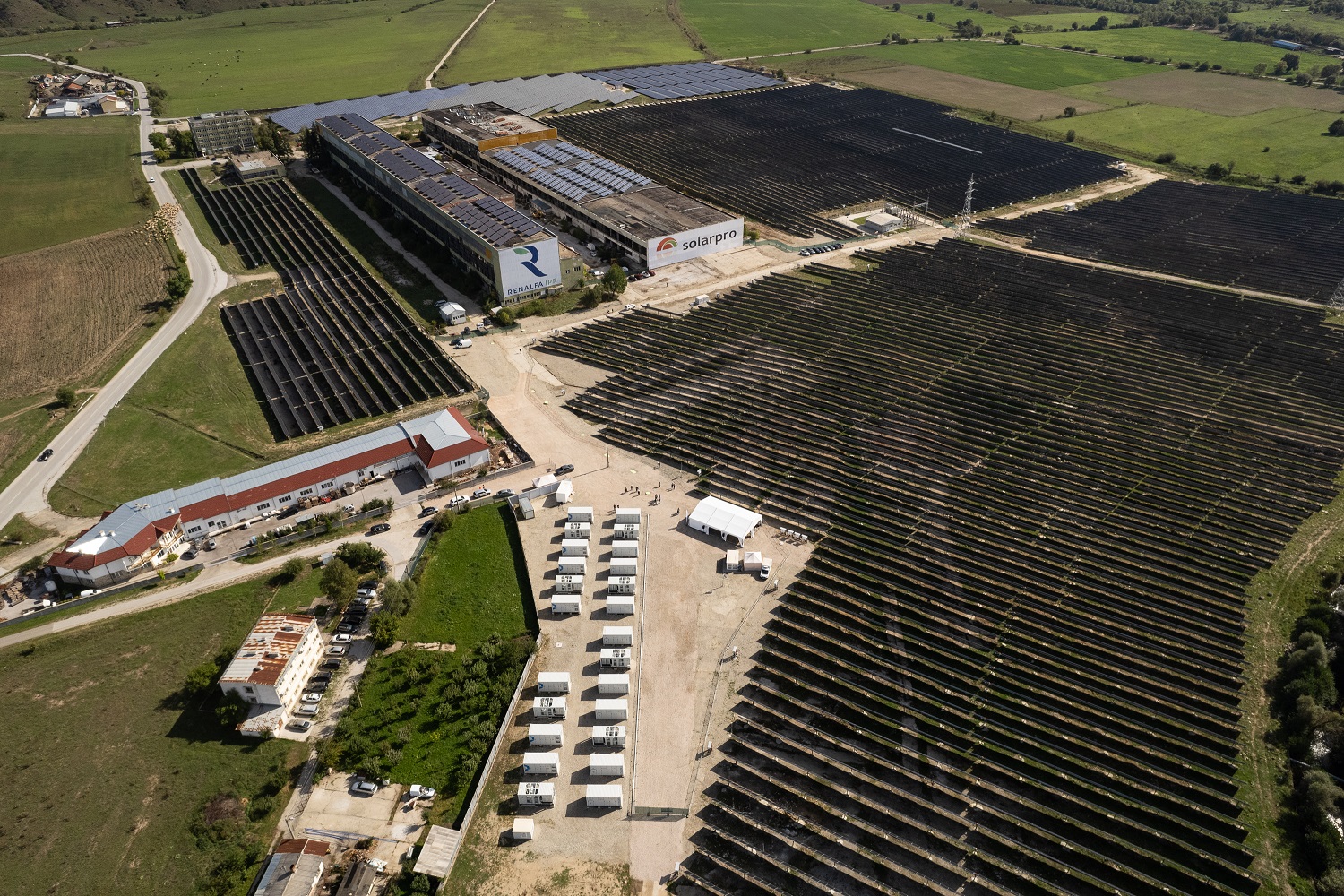
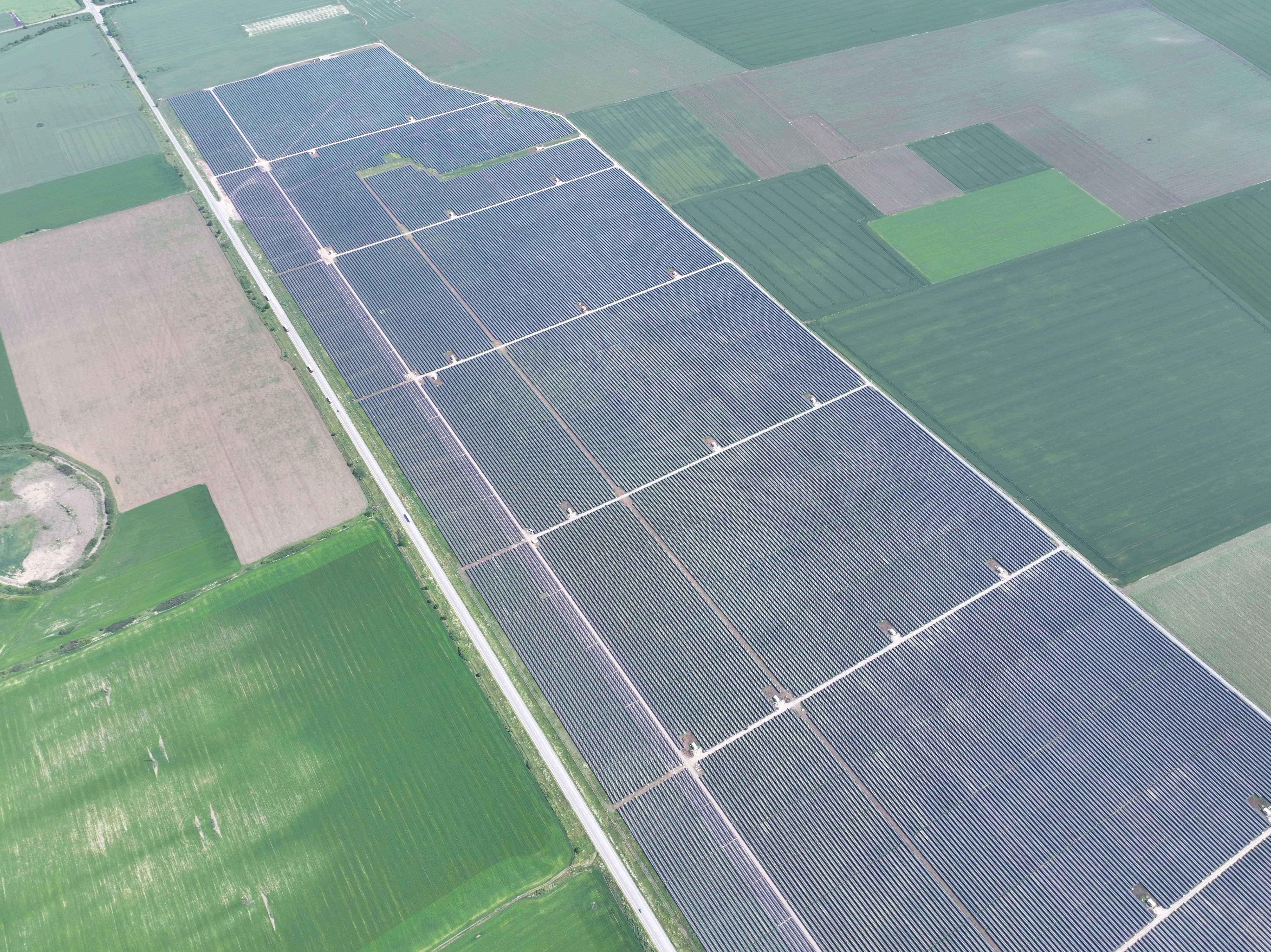
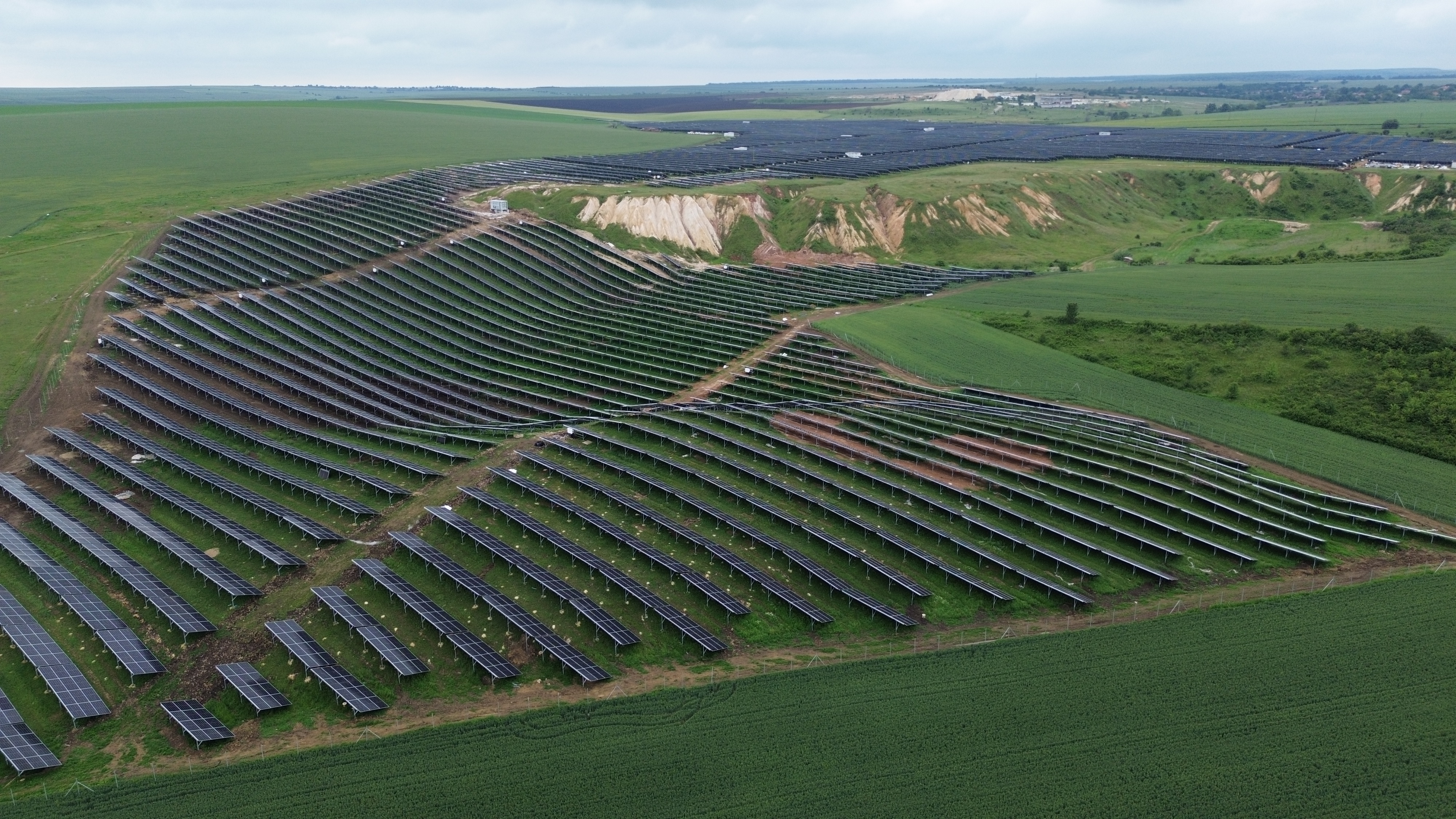
Ivo Prokopiev is a Bulgarian entrepreneur, media publisher and INSEAD graduate. He is the founder and CEO of Renalfa, one of the pioneering European companies investing in large-scale hybrid renewable-energy assets.
Link to the full policy paper: https://lnkd.in/p/dhbkmcYS